

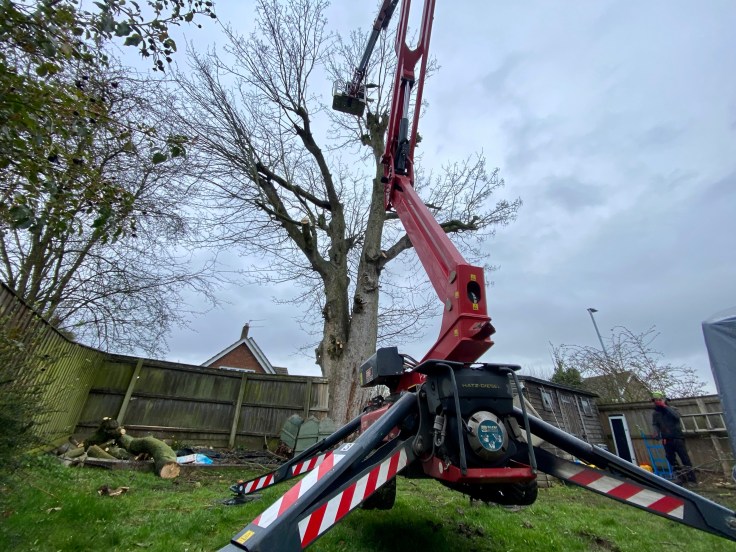
Tree pruning is a broad topic with many approaches and considerations. There are a wealth of tree species in the UK, both native and non-native, and many of them require a different approach or season, and respond to pruning in different ways.
Common pruning techniques are reduction prunes, deadwooding, crown lifting and retrenchment.
Reduction pruning of trees is used to reduce the size of a tree by decreasing the length of one or many stems and branches. This is great for letting more light into a garden space, keeping a tree healthy and avoiding branches of the tree falling and damaging property.
Deadwooding is done to reduce the risk of dead branches or sections of stem from falling and damaging buildings or property, or injuring people below. It is specific to dead and decaying parts of a tree.
Crown lifting is chosen to remove or reduce the lower canopy of the tree allowing clearance under the tree and more light to reach below it. It also gives a neater look to a prominent tree in a garden.
Retrenchment pruning is used on veteran (old trees) trees to extend their lifespan and mitigate risks from branch failure in the future. This type of pruning should be implemented by shortening heavy, long or weakened branches throughout the crown, while retaining as much leaf area as possible and encouraging the development of new secondary branches from epicormic (when shoots from the tree grow from a pruned stump) growth.
Contact us today for a free no obligation estimate for any tree pruning you have in Bury St Edmunds or the surrounding area.
 CLOSED FOR BUSINESS FOR THE TIME BEING